The Emperor Tarot Card Meaning
The Emperor is the fourth card of the Major Arcana, and he is the tarot's great builder. Where the Empress beside him in the deck tends to nourish and let things grow, he draws the boundaries, writes the rules and keeps the walls standing. His message is about structure: the routines, commitments and firm decisions that let a life hold its shape. He asks what you are willing to take responsibility for, and whether your foundation is strong enough to carry it.
- Upright
- authority, structure, stability
- Yes or no
- Maybe
- Number
- IV
What The Emperor shows
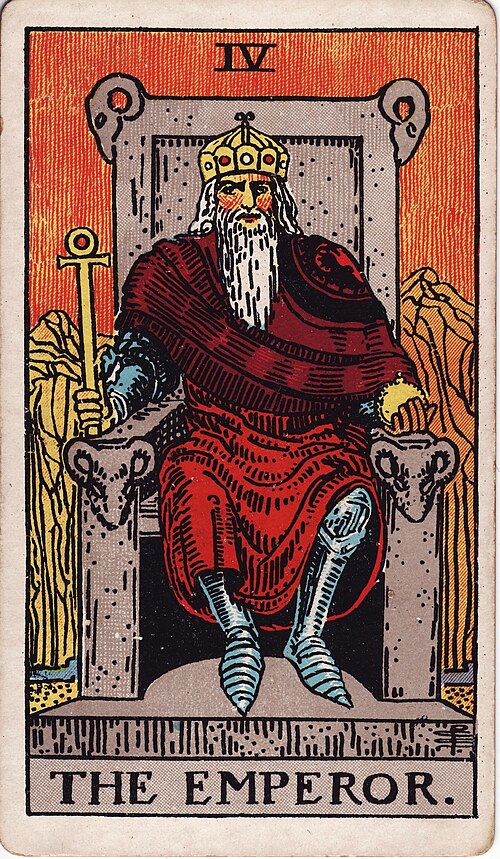
In Pamela Colman Smith's illustration, an older bearded man sits on a massive stone throne, rigid and upright, in the middle of a barren landscape. Behind him rise bare, jagged mountains, and a thin stream of water runs at their base. Nothing soft grows here. This is order imposed on rough ground, and the sparse setting hints that authority is built through effort rather than comfort.
The details reward a closer look. Four ram's heads, the animal of Aries, are carved into the throne, suggesting initiative, willpower and a certain head-on stubbornness. The Emperor wears red robes over armor, showing that his command is backed by readiness to defend what he has made. In one hand he holds an ankh-topped scepter, a symbol of life, and in the other an orb, a sign of the world he governs. The orange-gold sky behind him gives the scene a heated, urgent feel. The number four, the number of corners and foundations, reinforces the theme of something solid and square.
The Emperor upright
Upright, the Emperor stands for leadership that comes from stability rather than noise. He suggests clear boundaries, dependable habits and the willingness to make a decision and stand behind it. It can point to a person who offers protection and structure, such as a mentor, a parent figure or a manager, or to the part of you that is ready to take charge. The core idea is that freedom works better with a framework around it.
In everyday life this might look like finally building a schedule that works, setting a firm limit with someone, organizing a messy project, or stepping up to lead when no one else will. It is the card of the plan with deadlines, the budget that gets reviewed and the promise that actually gets kept. Used well, his energy feels calm, fair and reliable, not domineering.
The Emperor reversed
Reversed, the Emperor's strength can curdle in two directions. One is too much control: rigid rules, a need to be right, micromanaging, or an unwillingness to hear other views. The throne becomes a fortress, and the people around it feel shut out. The other is the opposite problem, a lack of structure, where discipline slips, boundaries blur and no one is quite in charge.
Day to day, you might notice this in a boss or relative who bristles at any questioning, or in your own habits of procrastinating, dodging responsibility or reacting angrily when plans are challenged. The reversed card invites an honest question: am I gripping too tightly, or not holding the line at all? Often the answer is a middle path where firmness and flexibility coexist.
The Emperor in love
In love, the upright Emperor favors steadiness: commitment, clear expectations and a partner who shows up consistently. For couples, it can suggest building a shared foundation, such as agreeing on plans, roles or living arrangements. For singles, it may point to wanting a relationship with substance rather than drama. Reversed, it can describe controlling behavior, emotional coldness, or a power imbalance where one person always decides. It can also show a fear of commitment, or a relationship that lacks any shared direction.
The Emperor in career
At work, the Emperor is a strong card for leadership, organization and long-term planning. It supports creating systems, taking ownership of a team or goal, and earning respect through reliability. It can also point to dealing with a figure of authority. Reversed, it may warn of a rigid workplace, an overbearing supervisor, or your own tendency to hold on to control instead of delegating. It can also indicate scattered effort and missed deadlines that call for more discipline.
The Emperor and money
Around money, the Emperor is about habits and attitudes: budgeting, planning ahead and treating your finances as something you manage deliberately. It encourages a sense of responsibility and a long view over impulse. Reversed, it may reflect either an overly tight grip, where fear of losing control makes every spending choice stressful, or a lack of structure, where bills and goals drift without a plan. It prompts you to look at your own routines rather than predicting any outcome.
The Emperor in a past, present or future position
Every spin of the Wheel of Fate draws three cards: your Past, Present and Future. Here's how The Emperor reads in each place.
As your Past card
In the Past position, the Emperor suggests that strong structure, authority or a dominant figure shaped your earlier circumstances. You may have learned discipline early, or lived under rules that still influence how you handle responsibility. Reversed, it hints at a past marked by either too much control or too little guidance.
As your Present card
In the Present position, the Emperor asks you to take charge of something now: set boundaries, make a plan or commit to a decision. Stability is available if you are willing to build it. Reversed, it suggests checking whether rigidity or disorganization is getting in your way.
As your Future card
In the Future position, the Emperor points toward a path where structure, leadership and steady effort could become important. It suggests that choices made with discipline now may help create something durable. Reversed, it cautions that stubbornness or a lack of direction could become obstacles if left unexamined.
Is The Emperor a yes or no card?
Maybe. The Emperor leans toward yes when your question is about planning, commitment or taking responsibility, because he favors firm, stable decisions. But he is conditional: the answer depends on whether you are prepared to do the structured work. Reversed, it leans toward no until rigidity or lack of discipline is addressed.
Advice from The Emperor
Ask yourself what in your life needs a firmer frame, and what has become too rigid to breathe. Pick one area, such as a routine, a boundary or a long-delayed decision, and give it clear terms you can actually keep. Then notice how you treat people who disagree with you. The Emperor's best form of authority is steady and fair, strong enough to hold up under questions and willing to listen.
The Emperor FAQ
What does the Emperor card mean in tarot?
The Emperor represents structure, authority and a stable foundation. He is the card of leadership, rules, boundaries and responsible decision-making. In the Rider-Waite-Smith deck, his stone throne and armor under red robes show order built through strength and discipline.
What does the Emperor mean reversed?
Reversed, the Emperor points to rigidity, excessive control or a lack of discipline. It can describe a domineering person or your own refusal to bend. It can also mean the opposite problem, where structure and boundaries are missing and no one is taking responsibility.
What do the ram heads on the Emperor card symbolize?
The four ram heads carved into the Emperor's throne represent Aries, the sign linked to him. They stand for initiative, drive and strong will. They also hint at the stubborn, head-on side of his authority, which is why the card can warn about inflexibility.